
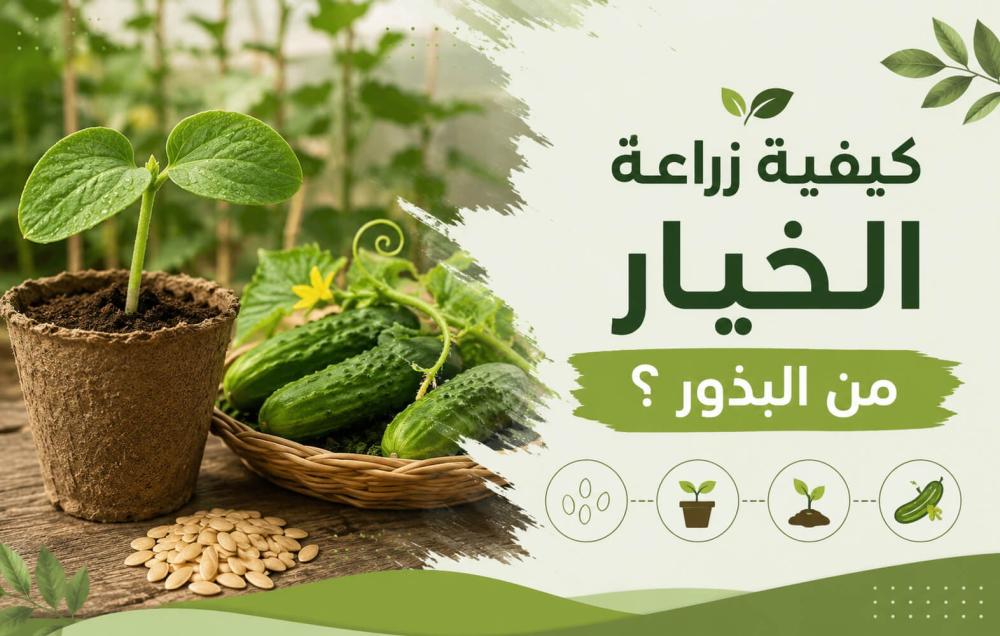
Cucumbers are among the most consumed vegetables in the Arab world, especially in Saudi Arabia, where they are used in many main dishes, salads, and appetizers. They are known for their refreshing taste and high nutritional value, as well as being relatively easy to grow compared to many other crops. Whether you're a professional gardener or a hobbyist looking to grow cucumbers in your home garden, this comprehensive guide will take you step-by-step through the process of growing cucumbers from seed, from selecting the right seeds to harvesting time, with a focus on the climatic conditions in Saudi Arabia.
Introduction to the cucumber plant and its basic needs
The cucumber (Cucumis sativus) is a creeping or climbing plant belonging to the Cucurbitaceae family. Native to South Asia, it is now a widely cultivated crop throughout the world. The cucumber plant is characterized by its rapid growth and abundant yield, making it an ideal choice for both farmers and gardeners. To understand how to grow cucumbers correctly, one must first understand their basic needs. Cucumbers require the following conditions for optimal growth:
- Cucumbers prefer temperatures between 20 and 30 degrees Celsius, which are common in most parts of Saudi Arabia during certain times of the year. Temperatures below 15 degrees Celsius may hinder growth, while excessively high temperatures can cause the plant to dry out and suffer from heat stress.
- Cucumbers thrive in various soil types, but they prefer fertile, well-aerated, and well-drained soil, as waterlogged soil can lead to root rot.
- Cucumbers need moderate humidity, as extreme dryness harms the plant, and very high humidity encourages the appearance of fungal diseases.
- Cucumbers are sun-loving plants and need at least 6-8 hours of direct sunlight daily.
Shop now for the best agricultural seeds from Al Talib Store at the best prices
How to grow cucumbers from seeds
The first and most important step in growing cucumbers from seed is choosing the right seeds. Many types of cucumber seeds are available on the market, each with its own characteristics that make it suitable for specific conditions or purposes. Some common types of cucumber seeds include:
- Local cucumber: It is distinguished by its unique taste and moderate size, and it is one of the favorite types in Arab cuisine.
- Hybrid cucumber (F1): Produces larger and more uniform fruits, and is more resistant to diseases and pests, making it a preferred choice for commercial farming.
- The option intended for canning: its fruits are small in size and suitable for pickling.
- Disease-resistant varieties: Researchers have developed cucumber varieties that are resistant to many fungal and viral diseases, reducing the need for pesticides.
Preparing the soil before planting
Proper soil preparation is essential for successful cucumber cultivation. The following steps should be followed:
- Plow the soil to a depth of at least 30 cm to loosen and aerate it. Leave the soil for 10 days after plowing to allow for proper aeration.
- Remove stones, weeds, and remnants of previous crops, as these may harbor pests and diseases.
- Add organic fertilizer such as decomposed cow or chicken manure to the soil at a rate of 20 cubic meters per acre, and mix it well with the soil to improve its fertility and aeration.
- Cucumbers prefer neutral or slightly acidic soil (pH 6.0-7.0). Agricultural sulfur can be added if the soil is alkaline.
- Add phosphate and potassium fertilizers according to soil analysis to ensure the availability of essential nutrients for the plant.
Steps for growing cucumbers from seeds in the ground
How to grow cucumbers from seeds in open ground requires following these steps:
- Create rows or raised beds (terraces) in the soil, leaving appropriate spacing between them. The ideal distance between rows is 1-1.5 meters, and the distance between plants on the same row is about 50 cm.
- Choose the appropriate planting dates for summer cucumbers.
- Place 3-4 seeds in each hole (hole), at a depth of 2-3 cm.
- Cover the seeds with a light layer of soft soil and press them down gently.
- Water the soil gently after planting, taking care not to disturb or wash away the seeds. Use a sprayer with a fine mist rather than a strong stream of water.
- About two weeks after the seedlings emerge from planting, remove the weak seedlings, leaving the two strongest plants in each hole.
Steps for growing cucumber seeds in pots
For those who wish to grow cucumbers at home or on rooftops, these steps can be followed:
- Use pots that are at least 30 cm deep, preferably with a capacity of 5 liters or more per plant, with holes in the bottom to drain excess water.
- Use artificial potting soil available in garden centers; it is lightweight, well-aerated, and well-drained.
- Place 2-3 seeds in each pot at a depth of 2 cm, then cover them with soil.
- Sprinkle the soil with water until it becomes moist, and repeat the process when the surface dries out, while avoiding overwatering.
- Place the pot in a location that receives direct sunlight for 6-8 hours daily.
- Since cucumbers are a climbing plant, provide them with a support (trellis) to climb on, which improves plant ventilation and facilitates the harvesting process.
Ideal germination temperature
Temperature is a crucial factor in the successful germination of cucumber seeds. The ideal germination temperature for cucumber seeds is between 24 and 30 degrees Celsius. At these temperatures, seeds germinate within 5-10 days. At temperatures below 18 degrees Celsius, germination may be delayed or fail altogether. Therefore, in colder regions, it is preferable to start seeds in greenhouses or pots indoors and then transplant them outdoors once the weather improves.
Shop now for the best Dutch cucumber seeds from Al Talib Store
Cucumber planting dates in Saudi Arabia
The timing of summer cucumber planting in Saudi Arabia depends on the climatic zone and weather conditions. Cucumbers are typically planted during two main periods of the year:
First period (spring):
- It begins in late February and extends through March and April.
- This period is suitable for most regions of the Kingdom where moderate temperatures are available.
- The crop is harvested during this period, during the months of May and June.
The second period (autumn):
- It begins in September and October.
- It is planted during this period in areas with a mild autumn and where temperatures gradually decrease at night.
- The crop is harvested in November and December.
Irrigation and fertilization after planting
Irrigation:
Cucumbers are plants that need regular moisture, but they are sensitive to overwatering, which can lead to root rot and fungal diseases. Here are the most important watering guidelines:
- During the germination stage: Keep the soil moist without overwatering, and use fine mist sprinklers.
- After germination: Water the plants regularly, increasing the amount of water as the plants grow and their water demand increases.
- Watering frequency: In hot weather, plants may need to be watered daily or every other day. In mild weather, watering can be done every 3-4 days depending on soil conditions.
- Irrigation method: It is preferable to use drip irrigation or surface irrigation in the early morning to avoid water evaporation, and to allow the soil surface to dry out during the day, which reduces fungal diseases.
- Signs of thirst: Wilted cucumber leaves in the middle of the day may be a sign that the plant needs water, but make sure the soil is dry before watering.
Fertilization:
Cucumbers are stressful plants that require constant feeding to produce abundant fruit. Divide the fertilization process into two stages:
- Soil fertilization before planting: Add organic, phosphate, and potassium fertilizers during soil preparation. Superphosphate (50 kg per acre) and agricultural sulfur (90 kg per acre) are added.
- Fertilization after planting: Start adding nitrogen fertilizers two weeks after planting, when the plants begin to grow vegetatively.
- Weekly fertilization program: Use a balanced fertilizer containing nitrogen (N), phosphorus (P) and potassium (K) in equal proportions or a higher proportion of potassium during the flowering and fruiting stage.
- Foliar fertilizers: Plants can be sprayed with foliar fertilizers containing micronutrients (such as iron, zinc and manganese) to promote growth and improve fruit quality.
- Signs of nutritional deficiency: If you notice yellowing of the lower leaves (nitrogen deficiency) or brown spots appearing on the fruit (calcium or potassium deficiency), the plants may need additional fertilization.
Al-Talib Store for good cucumber seeds
Now that you know how to grow cucumbers from seed in detail, the most important step is obtaining high-quality seeds that guarantee excellent germination and a bountiful harvest. Why choose cucumber seeds from Al-Talib Store?
- Al Talib Store offers cucumber seeds from carefully selected varieties, with a high germination rate and disease resistance.
- We offer multiple varieties to suit your different needs, whether you are looking for a local cucumber, a high-yielding hybrid cucumber, or varieties specifically for growing in pots or greenhouses.
- We are committed to providing seeds from certified and reliable sources, to ensure their purity and quality.
- Our team of agricultural experts is available to answer your questions and provide advice on choosing the right seeds and optimal growing conditions.
Conclusion
Growing cucumbers from seed isn't a complicated process, but it does require a thorough understanding of the plant's needs and the application of correct practices at each stage. By following the steps outlined in this comprehensive guide, you'll be able to harvest a bountiful crop of fresh, delicious cucumbers, whether you're growing them in an open field or in your home garden.
Frequently Asked Questions
1. How long does it take to grow cucumbers from seed to harvest?
The entire cucumber growing cycle from seed to harvest takes about 50-70 days in open ground, and about 45-60 days in greenhouses, depending on the variety and environmental conditions.
2. What are the appropriate planting distances for cucumbers between plants?
The ideal distance between plants in a row is 50 cm, and between rows (or ridges) it should be about 1 to 1.5 meters. In potted home gardening, it is preferable to leave a distance of 30-40 cm between plants.
3. Can cucumbers be grown in pots (containers) on the roof or balcony?
Yes, cucumbers can be grown in pots, provided that the pot size is sufficient (at least 5 liters per plant), with well-drained soil, sufficient light (6-8 hours of sun daily), and support for the plant to climb.